50 Years Later: The Apollo 11 experiment that's still sending data from the moon
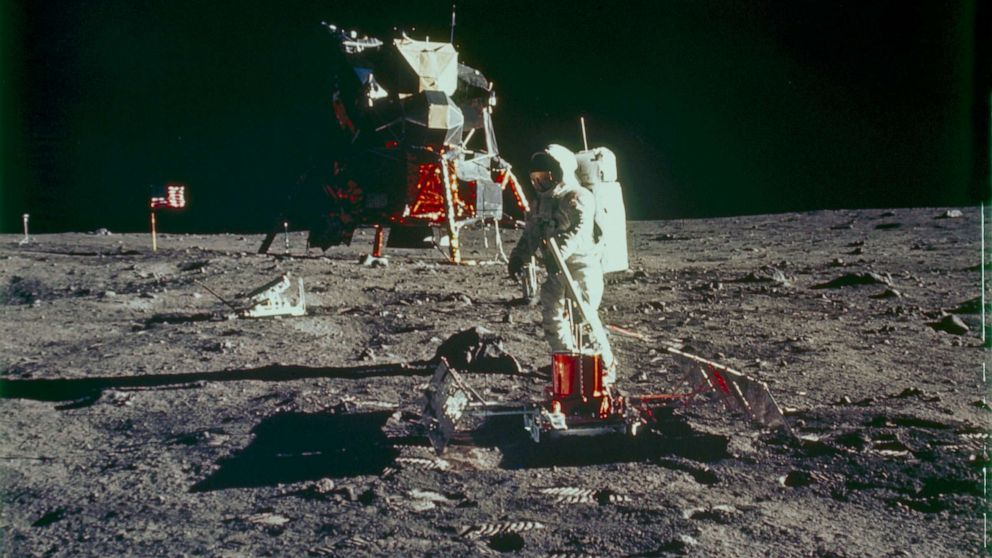
The Apollo 11 crew didn't just just accomplish landing on the lunar surface and returning safely — the men also conducted several successful experiments that revealed secrets about the moon. One of the experiments, the retroreflector array, is still in operation and providing valuable data 50 years later.
Set up on the lunar surface by astronaut Buzz Aldrin, the panel comprised of 100 reflective prisms has helped scientists study the moon in greater depth.
“We discovered that the moon had a liquid core, and found its size and shape,” said Doug Currie, a physics professor at the University of Maryland, College Park.
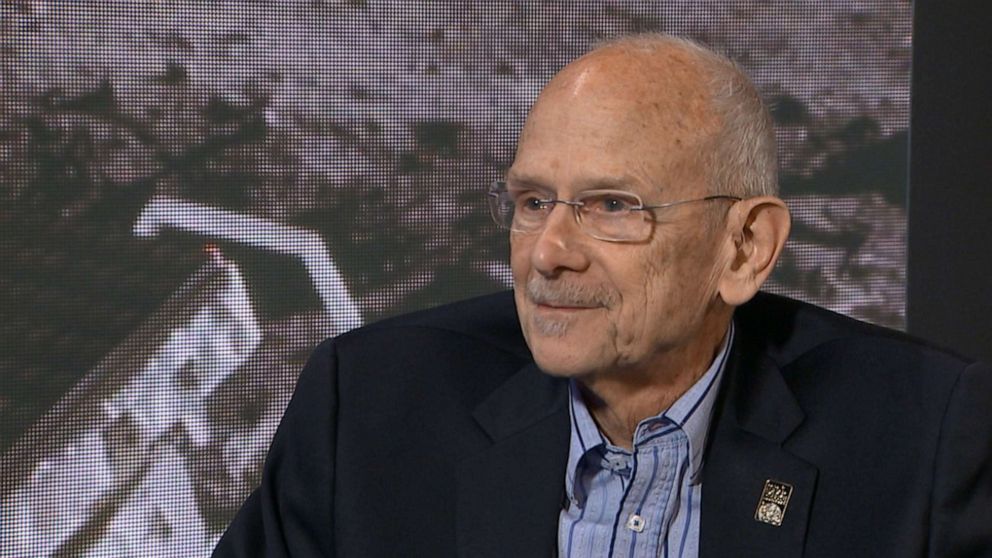
Currie was a principal investigator on the team that created the retroreflectors deployed during the Apollo 11 mission. Currie said NASA's objective was for the experiment to only last for five years.
"We are still getting data, still improving measures of the moon's physics and the measures of the universe," Currie said. "I don't think we ever thought that the accuracy would improve as much as it has."
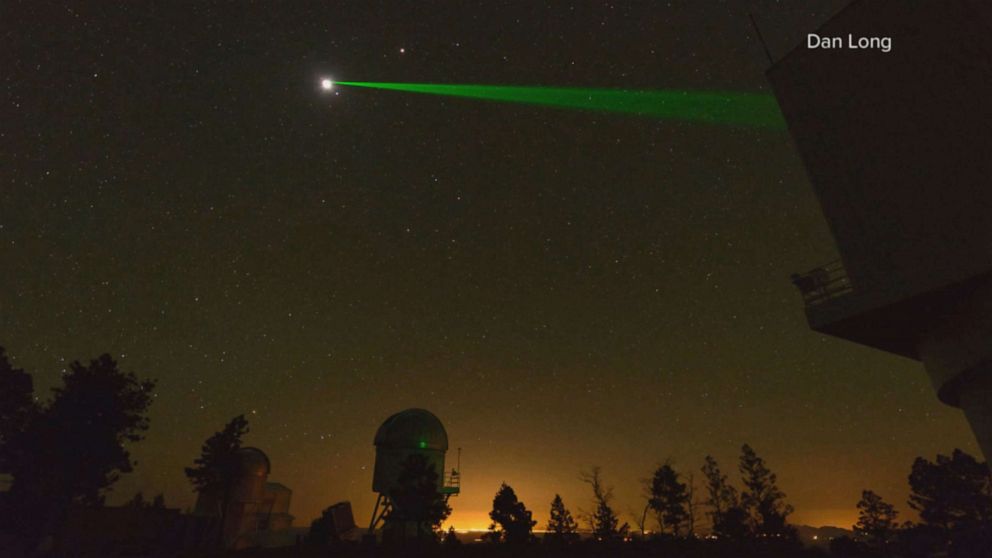
In order to record the distance from the Earth to the moon, scientists shoot lasers through a telescope at the retroreflectors which then bounce the light back to Earth at observatories like the McDonald Observatory in Fort Davis, Texas, and Apache Point Observatory in Sunspot, New Mexico.
During the Apollo 11 mission, Currie was closely monitoring from the McDonald Observatory as Aldrin set up the retroreflector array. Aldrin had to use a bubble level and sundial to properly position the experiment on the lunar surface.
“Buzz quit jumping around like you’re doing and get to work,” Currie recalls thinking at the time.
Retroreflectors were also placed on the moon during Apollo 14 and Apollo 15.
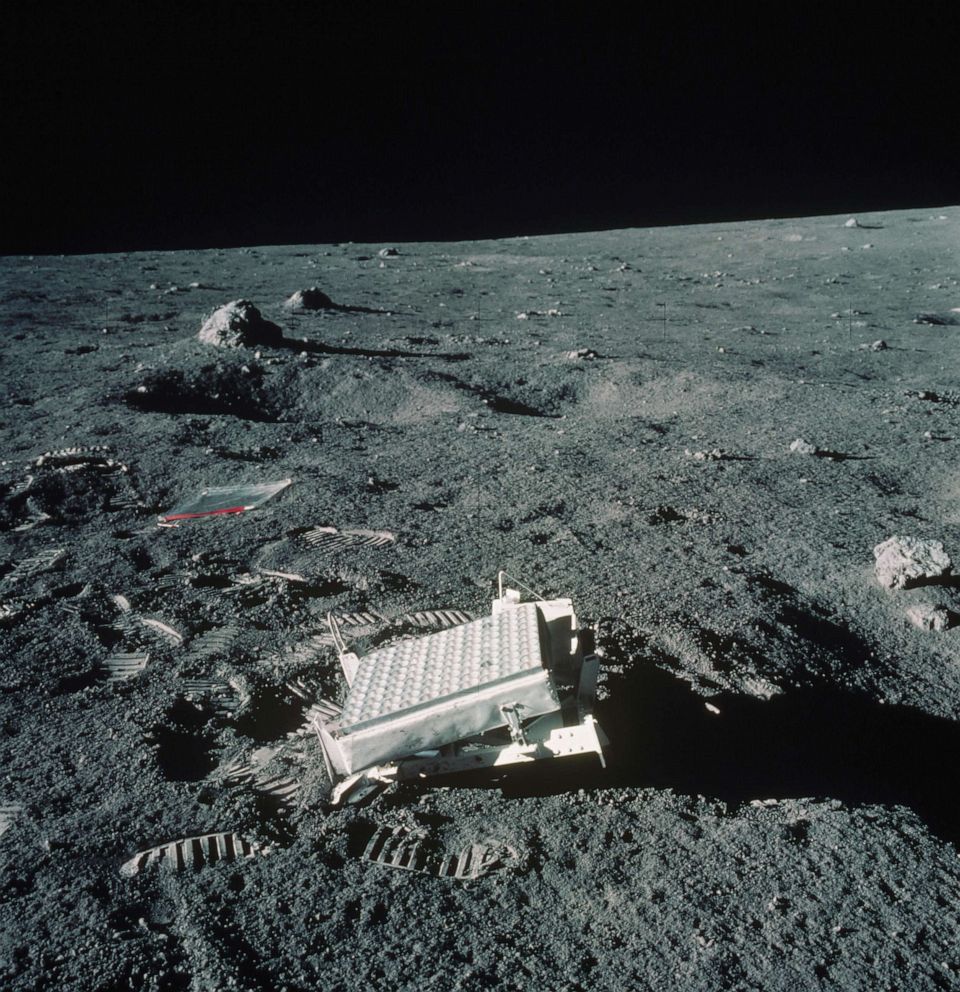
"They were essential because since the moon turns and we're at the center of masses I have to have three," Currie said.
Currie has now gotten approval from NASA to send a new, bigger reflector to the moon within the next few years.
“It should push the ability to address whether dark matter is affected by changes in gravitation," Currie said. “It will give us much better maps of the moon.”
The new reflector will not replace any of the current retroreflector experiments on the moon, but rather act as an addition to gather more precise data.
“It will require work,” Currie said. "We've got to upgrade the observatories. We've got to upgrade our software. But the main thing is to get something on the moon to motivate people to improve things.”
ABC News' Nate Luna and Christine Theodorou contributed to this report.